
The Power of Showing Up
What Happens When We See the Humanity in One Another
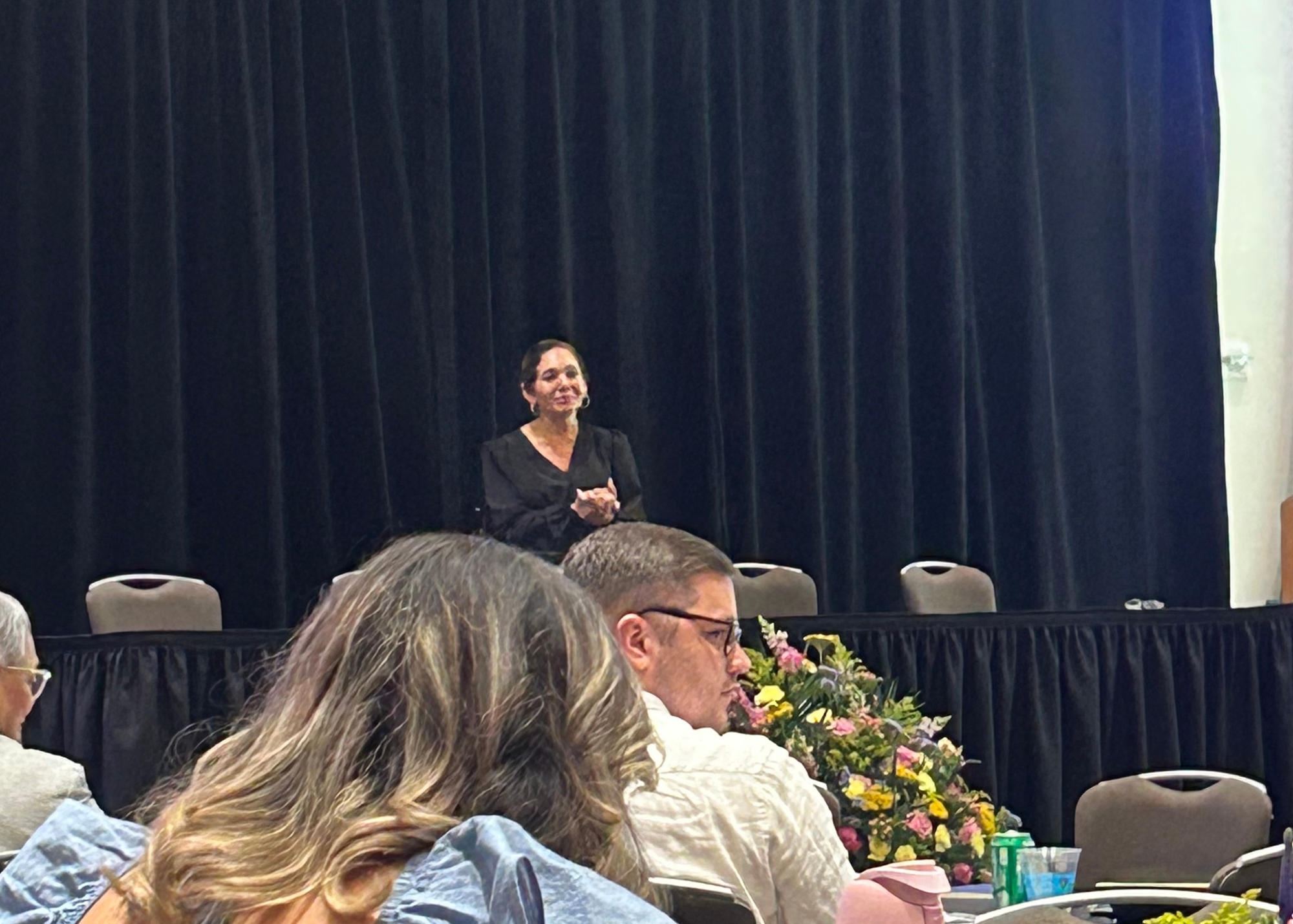
Carolene Mays, CEO and founder of Inspiring Leadership, LLC and Black Leadership + Legacies, Inc. recently served as keynote speaker for Anthem’s 2026 Interfaith Health & Wellness Summit in Indianapolis.
Sometimes the most powerful thing we can offer another human being isn't an answer.
It is our presence.
That message surfaced again and again during the 2026 Interfaith Health & Wellness Summit, presented by Anthem in partnership with the Center for Interfaith Cooperation. Faith leaders, health professionals, community organizations and advocates gathered Sept. 10, 2026, at the NCAA Hall of Champions in Indianapolis to talk about health, healing and creating pathways toward restoration, dignity and practical support.
But some of the day's most powerful moments were not about programs or systems.
They were about people — and what can happen when we are willing to see beyond someone's title, circumstances or outward appearance to the person underneath.
Keynote speaker Carolene Mays knows something about the difference between what people see and what someone may actually be carrying.
Mays has built successful careers in business, public service and media. But standing before the audience, she spoke candidly about periods of depression and hopelessness that began when she was young.
“For much of my life, on the outside things looked fine,” Mays said. “But on the inside there was a sheer darkness.”
As a teenager, Mays contemplated suicide. In college, she attempted to take her own life by swallowing sleeping pills with alcohol. A sorority sister received the message Mays had left, and she eventually awoke in a hospital surrounded by her mother and sorority sisters.
She survived, but she told the audience that surviving the crisis did not mean her struggles immediately disappeared.
Years later, looking back on the people who helped her through those periods, Mays came to a realization.
“My second chance did not happen in isolation,” she said.
Someone answered. Someone came. Someone helped her see hope when she couldn't see it for herself.
For the faith leaders, health professionals and community advocates in the room, Mays said that carries both an opportunity and a responsibility: they often are the people who show up when someone is trying to heal or begin again.
The conference also included a panel of experts — Attorney Sundeep Singh, Rabbi Aaron Spiegel, Imam Dr. Julius Mansa, and Pastor Jorge Ramos, who all shared their perspectives on how to support justice-involved individuals.
Sometimes people simply need to be seen
Mays illustrated that point with a story about a woman in a mental health facility who would leave her room each day and lie face down on the floor for hours. Doctors and nurses routinely stepped around her.
Eventually, someone stopped.
Rather than simply walking past, he sat on the floor beside her.
What he discovered was that her need was remarkably basic.
“People want to be seen. They want to be heard,” Mays told the audience.
That lesson — seeing another person's humanity before trying to solve their problem — also emerged in the words of Aisha Diss.
Diss, founder and executive director of project.ME, received the Community Star Award during the summit for the organization's work providing peer recovery coaching and harm-reduction support. She brings both professional training and lived experience to the work as a person in long-term recovery from opioid use disorder and justice involvement.
Her description of what success looks like in recovery challenged traditional measures.
Sometimes, Diss said, success is years in recovery. It can mean entering treatment, reconnecting with family, finding employment or obtaining housing.
Other times the milestone is much smaller — but no less significant.
“Sometimes success is a person trusting us enough to accept a bottle of water, some Narcan, a conversation, and maybe a little bit of hope.”
“And all of those moments matter,” she added.
At project.ME, lived experience isn't treated as something that disqualifies someone from helping others. It can become one of the things that makes genuine connection possible.
“Lived experience isn't something we hide; it is something we value,” Diss said.
Peers understand that recovery rarely follows a straight line. And sometimes, the person who once arrived needing help eventually becomes the person offering that same help to somebody else.
There is something deeply human about that cycle.
The person helping today may have needed help yesterday.
And the person struggling today may someday become the person who reaches back for someone else.
The changing face of vulnerability
Those messages also reflect how conversations around mental health, addiction and trauma have evolved.
For generations, people were often encouraged to keep the hardest parts of their lives private. Depression, addiction, trauma and emotional pain could be viewed as weaknesses to conceal rather than experiences to discuss.
There is still stigma to overcome.
But stories like those shared by Mays and Diss demonstrate the potential power of speaking openly about our struggles.
For Mays, that vulnerability included acknowledging the striking contrast between two chapters of her own life.
“There was a time when I tried to take my own life,” she said. “Years later, I was fighting to keep it.”
That second fight came in 2016, when Mays suffered a severe ruptured brain aneurysm.
She described being placed on life support after spending weeks in a coma and developing severe complications. Friends, family members and community members surrounded her family. A group of women even organized a schedule so someone could stay overnight at the hospital while her family went home to rest.
Again, people showed up.
Mays would later describe some of the people who entered her life during its hardest moments as gifts.
Her experience also changed how she viewed purpose.
After surviving the aneurysm, she began asking herself a fundamental question: What should she do with the life she still had?
For Diss, recovery raised a similar question.
“My recovery gave me my life back,” she told the audience, “but this work gave that life purpose.”
Who cares for the people doing the caring?
Mays also turned the conversation toward another group in the room: the helpers themselves.
Many of the summit attendees spend their days caring for patients, congregations, clients, families and communities.
Mays urged them to pay attention to what is happening inside themselves as well.
Exhaustion, she noted, can distort perspective. When people are depleted, overwhelmed or afraid, circumstances can begin to feel more hopeless than they actually are. Rest and replenishment, therefore, aren't indulgences. They are part of sustaining the ability to continue serving.
“Sometimes strength is allowing somebody to hold you up,” Mays said.
It is a message that runs counter to a culture that often celebrates endurance.
We admire people who keep going.
We praise the caregiver who seems able to handle everything, the community leader who never stops, the healthcare professional who continues showing up regardless of the personal toll.
But perhaps there should be just as much room for the person who says: I need help.
Or: I'm exhausted.
Or simply: I'm not OK right now.
The ability to acknowledge those things doesn't make someone less capable of caring for others. It may make that person more connected to the humanity of the people they serve.
Humanity before everything else
By the end of the summit, the stories of two women with very different life experiences had arrived at remarkably similar places.
Healing happens in relationship.
Lived experience can become a bridge rather than a source of shame.
People don't have to have their lives figured out before they deserve dignity.
And sometimes the most meaningful thing one person can do for another is simply refuse to walk past.
Diss closed her remarks by challenging those in the room to continue advocating, confronting stigma and creating places where people are treated with dignity.
“Every person deserves someone who believes they're worth showing up for,” she said.
Mays offered her own measure of what it means to make a difference.
Legacy, she said, isn't simply what people say about you after you're gone. It is what becomes possible for somebody because you were here.
Maybe that is the larger lesson.
We may not always be able to fix what another person is facing.
We may not have the right words.
We may not understand everything they have experienced.
But we can see them.
We can listen.
We can stay.
And sometimes, simply showing another human being that they are worth showing up for is where hope begins.