
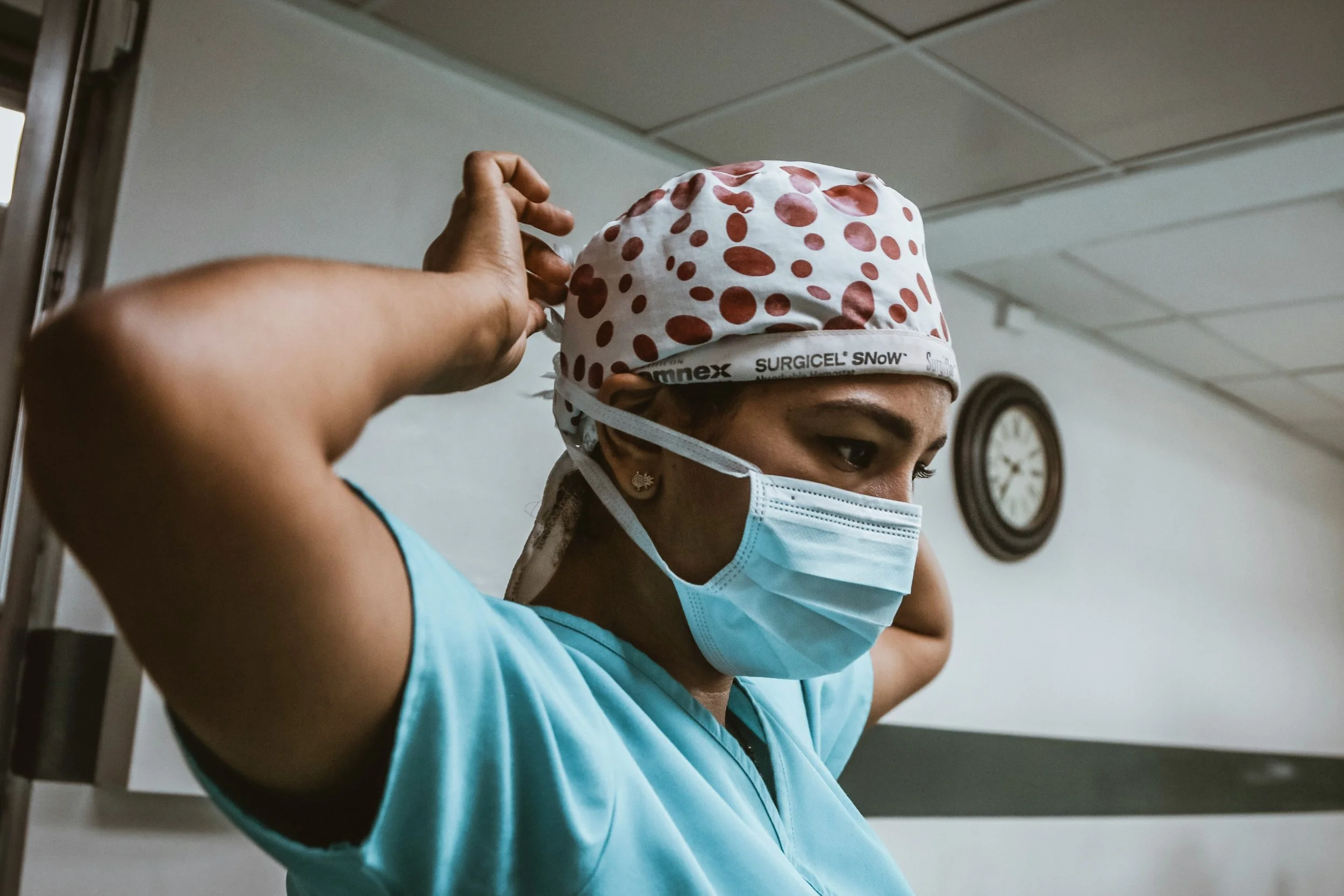
Healthcare
Trained to Save Lives, Rarely Taught to Save Their Own
Nurses, EMTs, medical technicians, and paramedics don't get into healthcare because the work is easy. They get into it because someone needs them … often in the worst moment of that person's life. But being needed, shift after shift, without a way to process what you're carrying, has a cost. It shows up as exhaustion that a good night's sleep doesn't fix, as a kind of numbness toward patients you used to feel deeply for, and eventually, for many, as a reason to leave the profession altogether.
The numbers back up what healthcare workers already know in their bodies. In a 2025 survey from Joyce University, 74% of nurses said they feel emotionally drained multiple times a week, and 53% said they'd seriously considered leaving the profession at least monthly over the past six months. The 2024 National Nursing Workforce Study found that 41.3% of RNs planning to leave or retire within five years pointed to stress and burnout as a driving reason. Nearly half struggle to sleep on work nights because of the job, and close to half worry weekly about making a medication error simply from being overwhelmed.
EMTs and paramedics carry an even heavier trauma load. Approximately 20% and 25% of EMS professionals experience PTSD,
compared with roughly 7–12% of the general population over a lifetime — and 42% report active burnout. Nearly 37% of firefighters and EMS personnel say they've contemplated suicide. These aren't statistics about weak people. They're statistics about what happens when a nervous system absorbs other people's worst days without a way to reset.
This is where trauma-informed, mind-body practice earns its place — not as a wellness perk, but as an operational necessity. Simple, evidence-based tools (breathwork, grounding, nervous-system regulation techniques) give healthcare workers something concrete to do with the stress response before it turns into burnout, compassion fatigue, or a decision to leave the bedside altogether. Regulated clinicians make fewer errors, communicate more clearly under pressure, and recover faster between hard cases — which means better care for patients and a longer, more sustainable career for the people providing it.
How We Work Together
The demands of healthcare don't leave much room for the people delivering it. Nurses, physicians, EMTs, and support staff absorb the weight of other people's worst moments — shift after shift, often without the tools to process what that does to them. Breathewrite's training brings trauma-informed, mind-body practices directly into healthcare settings — not as a wellness add-on, but as a clinical and operational investment in the people your organization depends on.

Mind-Body Medicine
Mind-Body Medicine
Evidence-based tools your team can use the same day
Grounded in the methodology of the Center for Mind-Body Medicine, this training gives healthcare workers concrete practices for regulating their own nervous systems under pressure — breathwork, grounding techniques, and self-awareness tools that fit into the reality of a clinical environment. A regulated clinician makes better decisions, communicates more clearly, and recovers faster between difficult cases.

De-Escalation
Most de-escalation training teaches a script. This training teaches something more fundamental — how to regulate yourself first, because a dysregulated nervous system cannot calm anyone else's. Healthcare workers learn to read the emotional temperature of a room, respond instead of react, and bring steadiness to high-stakes moments. Fewer incidents. Faster recovery. Better outcomes for patients and staff.
De-Escalation Training
Calmer rooms start with regulated people

Trauma-Informed Care
Trauma-Informed Care
Seeing the whole person — including your staff
Healthcare workers are trained to ask what's wrong with a patient. Trauma-informed care asks a different question: what happened to them? This training helps clinical teams recognize how trauma shapes behavior, communication, and physical health — in the people they serve and in themselves. The result is care that's more accurate, more compassionate, and more effective.

Brief Action Planning & Motivational Interviewing
Behavior change is hard to support in a10-minute appointment. Brief Action Planning and Motivational Interviewing give clinical staff a structured, evidence-based way to help patients take one realistic step forward … without pushing, lecturing, or triggering resistance. Paired with nervous system regulation, these tools become even more powerful, because ambivalence often has a physiological root, not just a motivational one.
Brief Action Planning & Motivational Interviewing
Meeting patients where they are